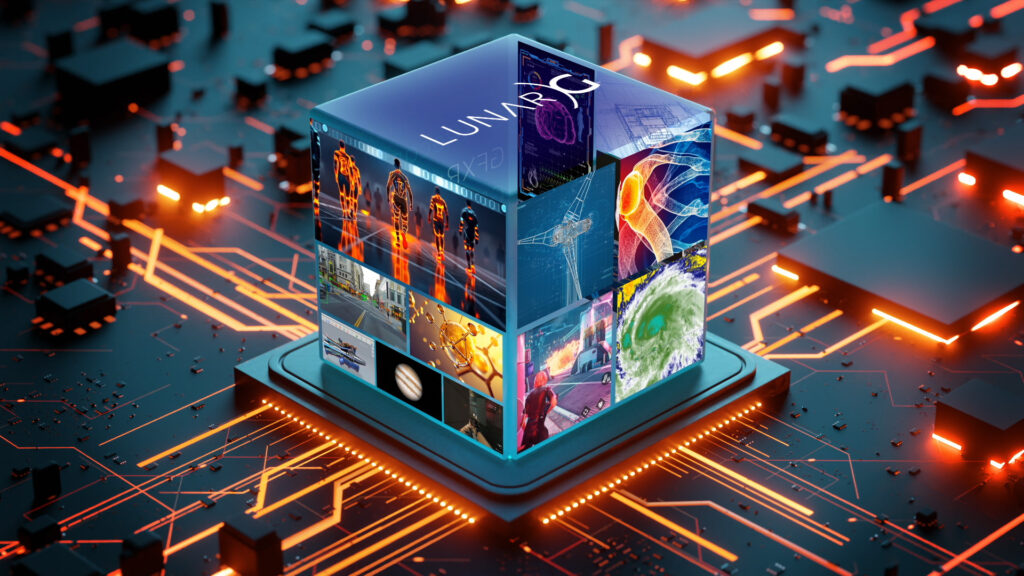
Creating the LunarG “Software Cube”
Hey everyone! As LunarG’s Marketing Manager, I recently dove into prototyping a fresh visual identity that captures what LunarG’s all about—low-level GPU software like Vulkan and WebGPU. I started brainstorming and thought, “How cool would it be to show advanced computing with a circuit board and some orange energy flow?” So, I tossed that idea into Grok and Midjourney—back when Grok was just starting to whip up images from text.
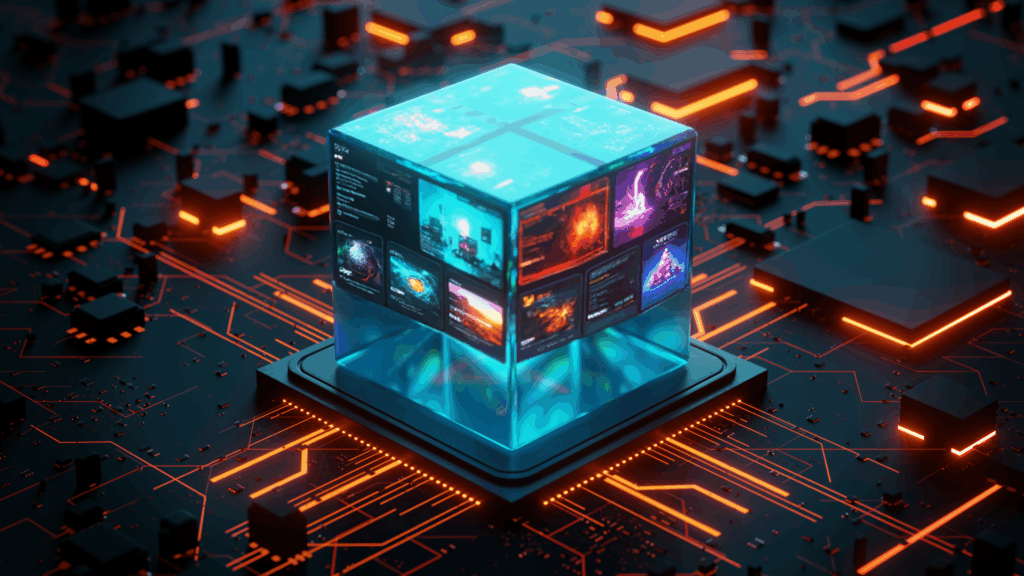
After churning out 40–50 images, I fell in love with the vibrant colors and vibe from Grok’s creations, especially ones with a microprocessor chip on a circuit board. But wait—slapping the LunarG logo on the chip made us look like a hardware company, and LunarG is all about software! So, I switched gears and came up with the idea of a cube to represent low-level software, running on top of hardware and powering a variety of sophisticated graphics applications. I tweaked the prompt to: “a dark cyan circuit board with orange energy flow, and a transparent cyan cube floating above with 3D sim software screenshots on the sides.” After another 40–50 tries, I hit on an image the whole team loved.
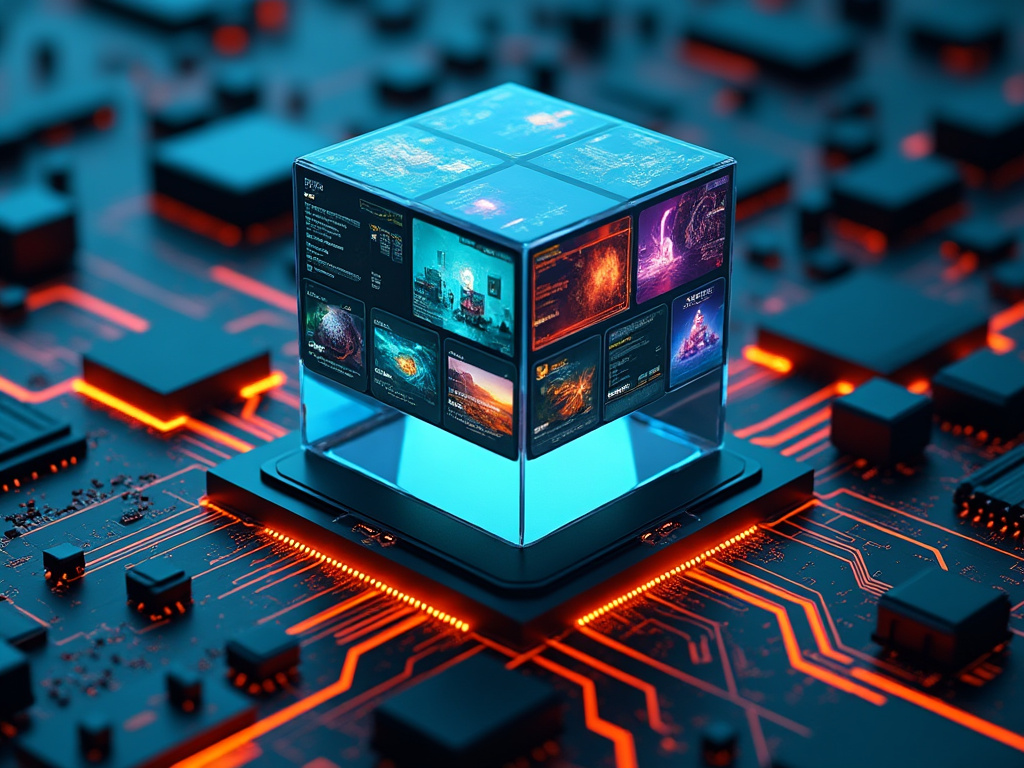
Sure, the cube’s side images don’t hold up under a magnifying glass, but that circuit? Super cool! We rocked it on LunarG’s homepage and at Vulkanised 2025 in Cambridge for a few months.
Then, LunarG wanted a promo video for AWE 2025 in Long Beach this June. My boss, David Desormeaux, and I brainstormed bringing the AI image to life with the cube as the star. We needed a 3D model, so I tried a Fiverr freelancer—meh, not great.
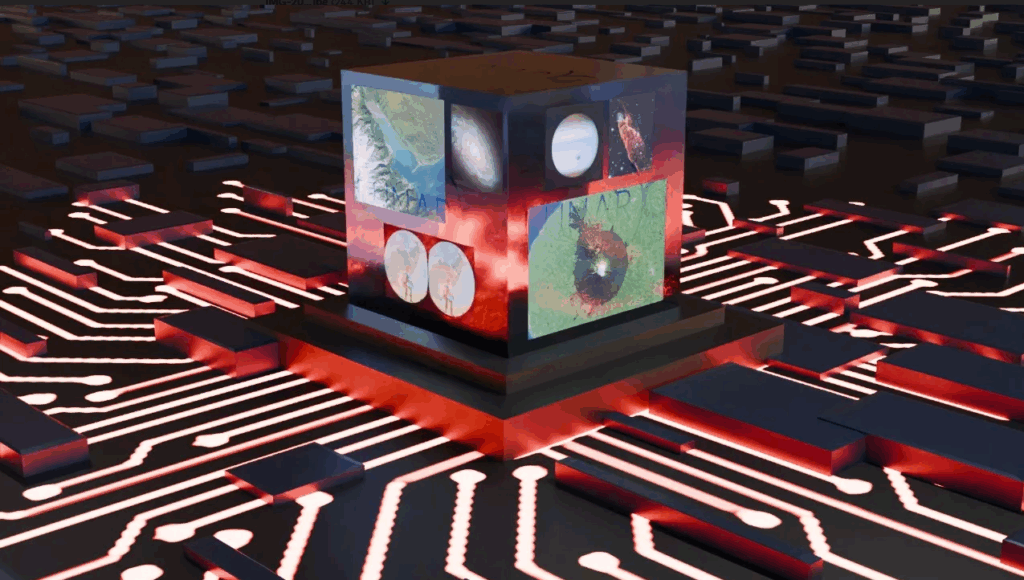
Then I chatted with a colleague from my time at Intel, Alexander Oshiro, shared the AI pic, and explained the vision. Alex got it and said he would love to do the whole project. He connected with his friend Eric Stenmark about doing the 3D modeling work. Get this—after describing the project and sharing the concept image on Thursday, Eric had a perfect Blender model of the cube and circuit board by Friday night! He had to texture map the application screenshots from the original AI pic, but it was clear that we’d be able to use real video footage when we rendered the real animation. As for the model itself, no revisions were needed—NOT ONE! The colors and details were spot-on!
That proof shot was enough to green light the video project. Subsequently, Eric crafted a “cube construction” animation, like software coming alive on hardware. He and Alex even figured out a slick way to animate the 3D cube with stock video textures in a 2D video. Check out a frame from the final video below and the resulting video—pretty awesome, right?
This whole journey shows how AI, ultra-talented artists, and teamwork can make magic happen!